

Your project is done, the US client is thrilled, and the invoice is sent. When you try to receive international payments, the silent tax on African entrepreneurship begins: the chase.
One reminder turns into three. “Just checking in” becomes a daily mantra. Then come the excuses; bank glitches, currency hurdles, or requests for a “different payment method.”
Suddenly, you aren’t a CEO; you’re a debt collector. Every hour spent tracking a wire transfer is an hour stolen from scaling your operations or landing your next big deal.
This isn’t just an inconvenience; it’s a drain on the growth of African businesses. But there is a way to get paid without the follow-up fatigue.
Why To Receive International Payments Is Still a Major Challenge
The global economy is becoming increasingly connected, opening up the world as your market. Today, a business in Lagos can easily serve clients in the United States, the United Kingdom, Canada, Europe, and virtually anywhere else. This accelerating digital trade is driving massive growth, with global cross-border payment flows expected to surge to nearly $290 trillion annually by 2030, according to industry researchers. As this opportunity expands, businesses are urgently looking for faster and more flexible ways to receive payments from customers across different countries, a trend confirmed by the rapid growth of cross-border payments noted by the World Bank.
Yet despite these opportunities, many businesses still struggle with one fundamental challenge:
Getting paid quickly and conveniently.
The problem is rarely about finding customers.
It’s about collecting payment after the work has been completed.
The Hidden Cost of Chasing Payments
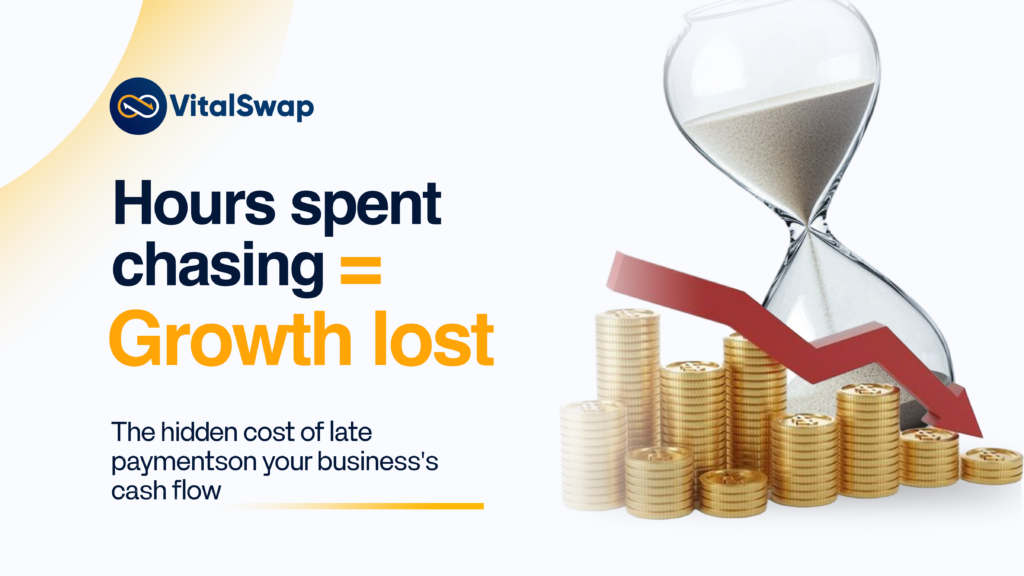
Many business owners underestimate the true impact of unpaid invoices, which creates a significant drain through both delayed cash flow and lost productivity. Research from the accounting platform Xero highlights that late payments cost small businesses billions globally each year, forcing entrepreneurs to spend valuable time following up on outstanding balances instead of focusing on strategic growth.
Every hour spent:
- sending reminders
- tracking transfers
- resolving payment issues
- confirming receipts
is an hour that could have been spent:
- serving customers
- finding new clients
- improving products
- growing revenue
According to research from Xero, small businesses globally spend hundreds of hours annually managing administrative payment-related tasks.
That time adds up quickly.
And for growing businesses, cash flow delays can be more damaging than a lack of sales.
After all, revenue only matters when it actually reaches your account.
Why International Clients Delay Payments
Interestingly, many international clients don’t intentionally delay payments.
The issue often comes from payment friction.
For example:
A client may want to pay immediately but faces challenges such as:
- limited payment options
- bank transfer restrictions
- currency conversion issues
- lengthy payment processes
- complicated invoicing workflows
The more difficult it becomes to pay you, the longer it usually takes for payment to arrive.
That’s why modern businesses are shifting their focus from simply sending invoices to creating easier payment experiences.
The Easier You Make Payments, The Faster You Get Paid
Think about your own behavior.
If you’re shopping online and checkout takes 10 minutes, asks for multiple forms, and keeps failing, what happens?
You leave.
The same principle applies to business payments.
When clients can pay easily, they tend to pay faster.
Businesses that simplify payment collection often experience:
- faster payment turnaround times
- improved customer relationships
- fewer payment disputes
- stronger cash flow
That’s because convenience removes excuses.
How Modern Businesses Receive International Payments
Over the last few years, businesses have moved beyond relying solely on traditional international bank transfers. Driven by the rapid growth of global ecommerce sales, with industry forecasts projecting trillions of dollars in annual online transactions worldwide, customers increasingly expect flexible payment methods. Today, businesses are increasingly using payment solutions that allow customers to pay through multiple methods, including bank transfers, card payments, USD payments, GBP payments, EUR payments, stablecoins, Apple Pay, and Google Pay.
The goal is simple:
Allow clients to pay using the method that works best for them.
Because when payment options increase, payment barriers decrease.
Why Payment Links Are Becoming Popular
One of the fastest-growing trends in international payments is the use of payment links.
Instead of exchanging account details back and forth, businesses simply send a payment link to their client.
The client clicks the link, chooses a preferred payment method, and completes the transaction, making the process significantly smoother.
This is one reason payment-link adoption continues to grow among freelancers, agencies, consultants, ecommerce businesses, and service providers globally.
How VitalSwap Helps Businesses Get Paid Faster

VitalSwap helps businesses simplify how they receive international payments.
Instead of relying on a single payment method, businesses can create payment links that allow clients to pay through multiple channels.
This flexibility helps reduce friction during payment and creates a smoother experience for both businesses and customers.
With VitalSwap, businesses can receive payments through:
- USD
- NGN
- EUR
- GBP
- USDT
- USDC
- Apple Pay
- Google Pay
- and other supported payment methods
The result?
Less time chasing payments.
More time growing your business.
A Real-Life Scenario Many Businesses Understand
Let’s say you’re a digital marketing agency in Nigeria.
You complete a campaign for a client in Canada.
The invoice amount is $13k.
Instead of sending multiple banking details and hoping the transfer arrives correctly, you simply send a payment link.
The client chooses their preferred payment method and completes payment in minutes.
No endless email threads.
No confusion.
No unnecessary delays.
Just a smoother payment experience.
The Future of International Business Payments
Cross-border commerce is expected to continue growing significantly over the coming years.
As this growth continues, more businesses are serving international clients, selling globally, hiring internationally, and receiving payments across multiple currencies.
Winning customers matters, but getting paid efficiently is what keeps a business running.
Final Thoughts
Many businesses assume late payments are simply part of doing business internationally.
But in many cases, the real problem is not the client.
It’s the payment process.
The easier it becomes for customers to pay, the faster businesses get paid.
So if you’re spending too much time following up on invoices, chasing transfers, or resolving payment issues, it may be time to rethink how you collect payments.
Because honestly, getting paid should feel like the reward for great work, not another task on your to-do list.
Start Receiving International Payments More Easily
Looking for a better way to receive payments from international clients?
Explore how VitalSwap Payment Links can help your business collect payments across multiple currencies while reducing payment friction and improving cash flow.
Explore More: