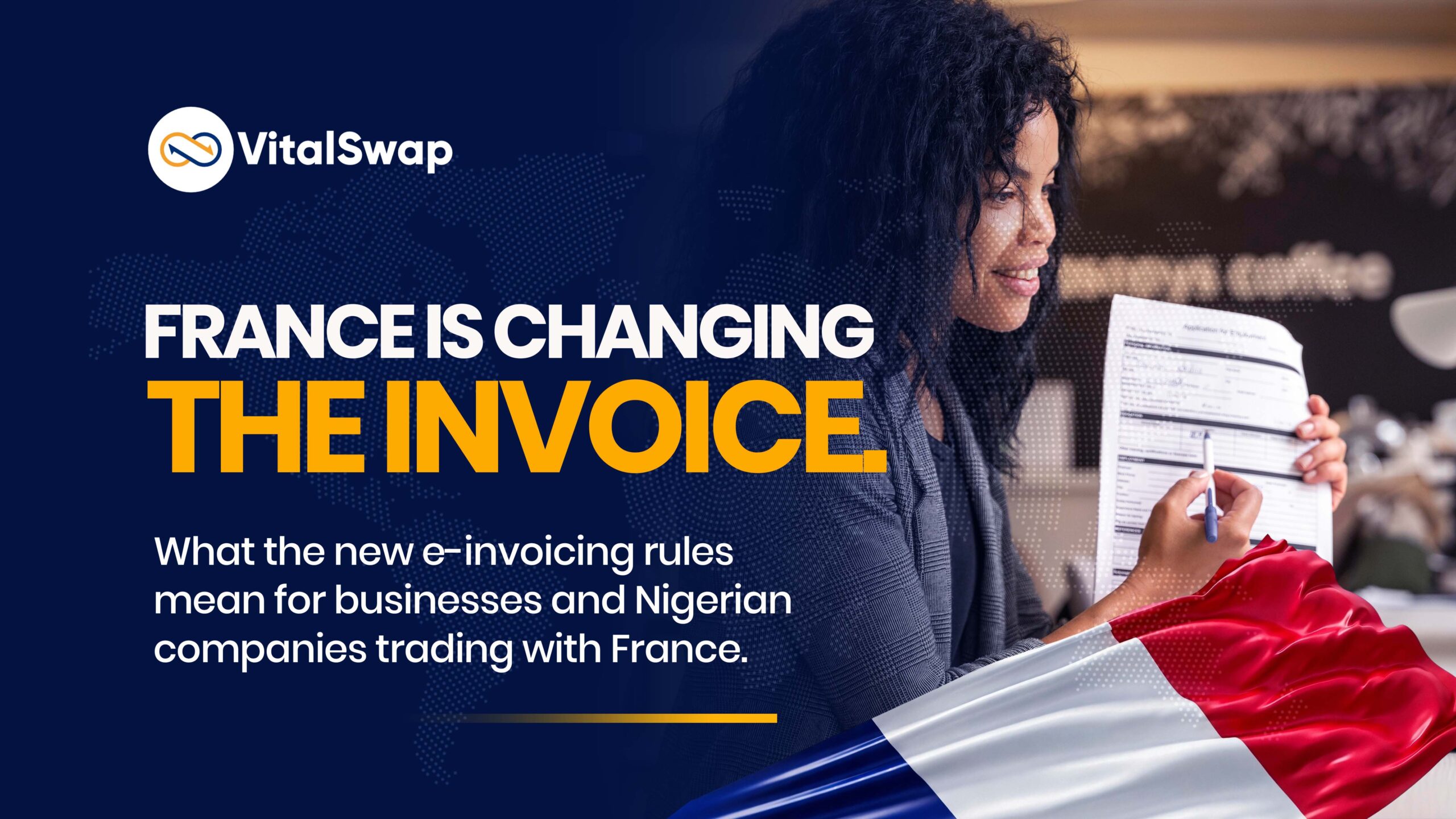
France is changing the way businesses handle invoices.
As of September 1, 2026, businesses in France have entered the first phase of a major e-invoicing reform that will change how companies receive, issue and report invoice information. More than 10 million economic actors are expected to be affected by the wider reform.
For businesses, this is bigger than replacing paper invoices with digital documents. It affects how financial information moves between companies, accounting systems and the French tax administration.
And for companies doing business across borders, including Nigerian businesses working with French customers or suppliers, understanding where these rules apply can help prevent unnecessary confusion.
Here is what businesses need to know about France e-invoicing in 2026.
1. What Is France’s E-Invoicing Reform?
France’s e-invoicing reform is a government initiative designed to move business-to-business invoicing into a more structured electronic system.
Under the new system, an electronic invoice is not simply a PDF that a business creates and emails to another company. It has to follow a recognised electronic format and contain required invoice information in structured fields. The invoice is transmitted through an approved platform within France’s e-invoicing framework.
The reform also introduces e-reporting. This involves electronically transmitting certain transaction information and, where applicable, payment information to the French tax administration for transactions that fall outside the e-invoicing system.
That distinction matters.
A business might think, “We already send invoices electronically, so we’re fine.” But sending an invoice as an email attachment is not necessarily the same thing as complying with France’s e-invoicing requirements.
The reform is therefore less about simply going paperless and more about standardising how invoice and transaction data moves through the business ecosystem.
For businesses, that means invoicing software, accounting systems and financial workflows all become more important.
2. When Does France E-Invoicing Become Mandatory?
The rollout is happening in stages rather than requiring every business to change everything at once.
September 1, 2026
As of September 1, 2026, all businesses covered by the reform must be able to receive electronic invoices, regardless of their size.
At the same time, large companies and intermediate-sized enterprises must begin issuing their invoices electronically and transmitting the required transaction and payment information through the system.
September 1, 2027
The next major deadline applies to small and medium-sized businesses, very small businesses and micro-enterprises.
From September 1, 2027, these businesses will also have to issue electronic invoices and meet the applicable e-reporting requirements.
So, while September 2027 may seem like a long way off for smaller businesses, the preparation work should not be left until the deadline.
Businesses need to consider their accounting software, invoicing process and chosen platform well before they are required to issue invoices electronically.
3. What Does France E-Invoicing Mean for Business Operations?
This is where the reform becomes particularly important for business owners.
An invoice sits in the middle of several financial activities: a company delivers a product or service, creates an invoice, sends it to the customer, waits for payment, records the transaction and eventually reconciles the payment against the invoice.
When invoicing becomes more structured and digital, businesses have to think about that entire process rather than treating the invoice as an isolated document.
For example, a company may have to review:
- How invoices are created and issued
- How supplier invoices are received
- Whether its accounting software can handle the required formats
- How invoice information is transferred between systems
- How transaction and payment information is reported
- How invoices are matched with incoming payments
This can create additional work during the transition, but it can also encourage businesses to build more organised financial processes.
France’s government says the reform is intended to support a more efficient and competitive economy, while giving businesses a more standardised digital framework for exchanging invoice information.
But there is an important business lesson here:
Better invoicing does not automatically mean better cash flow.
A business can issue a perfectly structured invoice and still wait days or weeks for the money to arrive.
That is why companies operating internationally also need to think about what happens after the invoice is issued particularly when payments cross borders or involve foreign currencies.
For businesses receiving international payments, having the right financial infrastructure can make that part of the process easier to manage. A USD Business Account, for example, can give eligible businesses a way to receive and manage USD as part of their broader international financial workflow.
4. France–Nigeria Business: What Does This Mean for Nigerian Companies?
France and Nigeria have a growing commercial relationship across areas including trade, technology, professional services, energy and investment.
That means a Nigerian business may find itself dealing with a French company without actually being established in France.
This is where businesses need to be careful.
A Nigerian company does not automatically become subject to France’s domestic e-invoicing requirements simply because it has a French customer.
The treatment depends on factors such as where the businesses are established, their VAT status and the nature and location of the transaction. France also has specific e-reporting rules for certain foreign companies without a permanent establishment in France when they carry out transactions that are considered taxable in France.
For example, a Nigerian company providing services to a French business should not assume that the same rules automatically apply as they would to two businesses established in France.
The smarter approach is to determine what type of transaction you are making and which obligations actually apply to your business.
But there is another side to the France–Nigeria connection that Nigerian businesses should pay attention to: getting paid.
Imagine a Nigerian consulting company working with a French client. The company may have its invoicing process completely organised, but it still needs a reliable way to receive its international payment, manage the foreign currency and reconcile the money with the corresponding transaction.
The same applies to Nigerian businesses importing goods from France. The invoice is only one part of the transaction. The business also needs to manage the actual payment to the French supplier.
This is why cross-border businesses need to think beyond invoicing.
If your business regularly receives money from customers outside Nigeria, it is worth understanding the different options available for receiving international payments and how they fit into your wider financial operations.
5. How Businesses Can Prepare for France E-Invoicing
The best time to prepare for a change in financial infrastructure is before it becomes a problem.
For businesses affected by France’s e-invoicing reform, preparation should start with understanding exactly what applies to them.
1. Confirm your obligations
Determine whether your business is established in France, subject to French VAT and what types of transactions you conduct. If you operate from outside France, check whether you fall under the relevant e-reporting requirements instead.
2. Review your invoicing and accounting software
Your existing system may be able to integrate with the new framework, but don’t assume it can. Check whether your software or service provider supports the required electronic invoicing processes.
3. Prepare to receive electronic invoices
This is already an obligation for businesses covered by the reform from September 1, 2026. France’s system requires businesses to receive invoices through the approved framework.
4. Look beyond the invoice
Review what happens after an invoice is issued or received.
Can your team easily identify when a customer has paid? Can payments be matched to invoices? Can your business manage foreign-currency transactions without creating unnecessary delays?
These questions become even more important when you’re dealing with international customers and suppliers.
5. Get your international payment process ready
For a Nigerian company doing business with France, Europe or other international markets, invoicing is only one piece of the financial workflow.
You also need to consider how money gets from your customer to your business, how you hold or manage foreign currency, and how you pay international suppliers or partners.
That is where having the right business payment infrastructure can make a difference.
Built for Your Next Move.
From receiving international payments to managing cross-border business transactions, VitalSwap Business gives businesses the infrastructure to move money across borders while they focus on running the business.
France’s e-invoicing reform is ultimately part of a much bigger shift: businesses are moving toward more connected, digital financial operations.
For companies trading internationally, the opportunity is to make sure the invoice, the payment and the money movement all work together.